
Hiking Is Easy
You don’t need experience. You don’t need special gear. You don’t need multiple days off work or school.
All you really need is a few hours, a good pair of shoes, and enough water for the hike you are taking.
When you are first getting into hiking, you can read hundreds of articles about what you need. You can spend thousands of dollars on gear you’ll never need. You can hike for hours and still never find what you are seeking.
Many new hikers make mistakes before they ever step on the trail.
This Trail Journal is designed to help you avoid some of them.
Mistake #1
Spending Too Much on Gear
Buying “cheap” gear can cost you more in the long run. However, if you are only trying out hiking, buying budget gear is a much better plan than spending thousands of dollars on equipment you may use once.
Influencers will tell you to buy this gear or that gear to get the best comfort on the trail.
The truth is, any gear can be uncomfortable. And almost any gear can be made to work.
For years, I used an Ozark Trail backpack from Walmart. I kept saying that when it broke, I would buy a new pack.
It lasted nearly ten years and over 1,000 miles.
In fact, it is still in good shape.
I eventually replaced it with a more expensive, but still budget-friendly, Teton Explorer 60L.
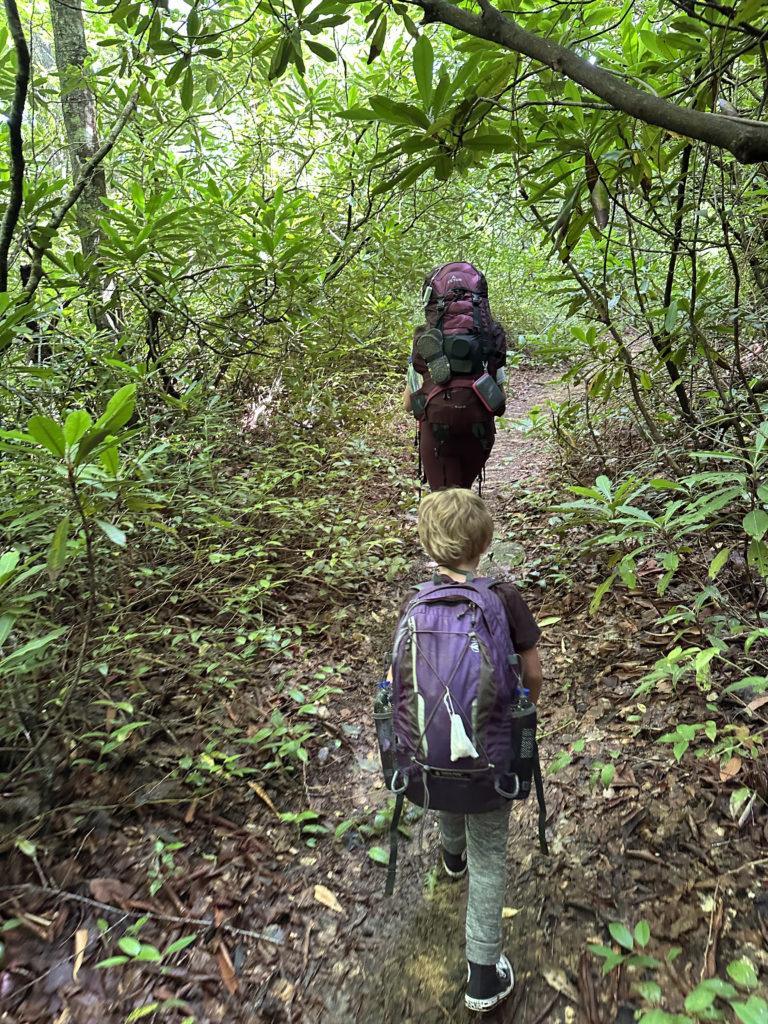
For your first hike, or even your first few hikes, you can use what you already have. Unless you are planning a multiday backpacking trip, a school backpack may work just fine. If the hike is short enough, you may not even need a backpack.
You don’t need special shoes. A good pair of tennis shoes or comfortable boots with a rubber sole will work for many day hikes.
Some people hike in sandals. My only suggestion is that if you hike in sandals, make sure they actually attach to your foot, both at the toes and the heel. A few miles in, when your feet start slipping off the heel or the heel slaps your foot for the hundredth time, you’ll wish they did.
Water is important, but you don’t necessarily need to carry several liters for a short day hike. How much you need depends on the distance, weather, terrain, and your own body. You don’t need a fancy water bottle. Buy a bottle of Smartwater, or if you already have a reusable bottle, use that.
If you like hiking, then start spending money on good gear.
Start with shoes. They can make a big difference.
Then buy what makes you comfortable.
If you are not planning on multiday backpacking, a small day pack is probably all you need.
Mistake #2
Packing Too Much
To be fair, this is not just a new-hiker thing.
Most people pack their fears.
What I mean by this is that we pack for what we think will happen.
Maybe we ran out of water once, so we pack extra water every time. Maybe we got caught in the rain, so we bring three different ways to stay dry. That weight adds up, and it can make the trip less enjoyable.
Pack what you need, not everything you might need if something specific goes wrong.
To elaborate a bit further: if there is little chance of rain, you probably don’t need a poncho and an umbrella. If the weather is warm, you probably don’t need a sweatshirt and a jacket. For a short day hike, you probably don’t need a change of clothes or a full-size medical kit.
Unless you are planning for a specific activity, climbing gear can probably stay at home.
These may sound like funny examples, but they are things I have actually seen.
Some I have actually done.
Taking a full cook kit on a day hike is probably not necessary. Don’t pack your fears. Pack what you need to be comfortable and prepared for the conditions you are actually facing.
Know your body.
Pack the water you will need. Pack snacks. Pack a lunch if needed. Carry a small first-aid kit and whatever basic safety items make sense for your route and conditions.
Unless you are spending multiple days in the backcountry, leave the rest at home.
My go-to list for a typical day hike:
- Water appropriate for the hike and conditions
- High-protein, high-calorie snacks
- Backpack
- Small first-aid kit and basic safety items
- Bug spray when needed
- Trekking poles (because my knees hurt)
The list will change depending on the trail, weather, season, and length of the hike.
That’s the point.
Pack for the hike you are actually taking.
Mistake #3
Being Too Ambitious
Hiking is hard on the body.
If this is your first hike, choose a shorter trail. Check the terrain. Check the ratings. Ask people who hike for suggestions.
The hiking community is full of people more than willing to help someone get started.
I will say we are a forgetful bunch, and we may forget to mention the second, third, and maybe fourth climb before the summit.
But we mean well.
Use something like AllTrails or OnX to help plan your hike. Know your limits.
If you plan a 10-mile hike and you have never hiked before, chances are good you will not complete that hike.
If you plan a 2-mile hike and get one mile in before you are out of energy, turn around.
You did good.
You didn’t fail a hike. You just completed it before the end.
A hike should always have one goal:
Hike until you complete the hike.
That doesn’t mean you reach your original destination or hit a certain number of miles. There’s no time limit. No altitude goal.
Your hike is over once you accomplish what you set out to do.
For me, every hike has two goals:
- Spend time in nature.
- Spend time with God.
Some hikes last 10–15 hours. Some last an hour.
I always have a destination in mind. But if I am not feeling the drive that day, I hike until I have accomplished those two goals, and then I go home.
Not as a failure.
As a hiker who completed another hike.
Mistake #4
Not Being Present
Hiking is a great way to step away from life for a short time.
I have passed hikers wearing earbuds, head down, missing everything around them.
Sometimes that is a necessary part of hiking. There are times when you just have to get it done.
But if that is every step of every hike, you are missing something.
Don’t be so wrapped up in the idea of hiking that you forget to enjoy the hike.
Let God reveal His creation to you.
Let Him speak to you.
Enjoy the hike.
Push yourself, sure. I have pushed myself beyond what I thought was my limit and still enjoyed the hike. I have also ignored the hike because I was too focused on getting miles behind me.
There is a difference between completing a hike and experiencing one.
Allow yourself to be present on the trail.
Pay attention to where you are.
Listen.
Look around.
Enjoy every step.
Mistake #5
Failing to Start
Many people will plan and plan.
Replan and plan some more.
They believe everything needs to be perfect before they begin.
The weather must be perfect. The gear must be perfect. They must feel their best.
This pursuit of perfection keeps them rooted in place.
Let go of perfection.
Let go of the idea of hiking and take the first step.
On the trail, perfection falls away.
Splash through the puddles.
Get dirty.
Sit on wet grass.
Forget things.
Leave things on the trail.
Find things others have left behind.
Don’t let perfection ruin your hike.
Embrace failure as part of your hiking journey. Learn from those failures and let the next hike be better.
A fear of failure can keep us from ever beginning.
And sometimes the only way to learn how to hike is to go hiking.
Why not fail on the trail?
Back at the Trailhead
There are hundreds of “Top 5” articles out there.
With this one, I tried to provide something a little different.
Mistakes 1–3 are common and can be found in many places. Despite influencers telling you to spend money, there are plenty of resources telling you to wait until you know hiking will become a habit.
Mistakes 4 and 5 may not be unique to Eremos’ list, but I feel like they are often overlooked.
Being present changes how you see things.
It changes how you process things.
It changes the hike.
And never starting is a mistake that can only be remedied on the trail.
No amount of reading or preparing can fix not starting.
Start with 30 minutes on a Rails-to-Trails route, like the Tweetsie Trail or the Mendota Trail. Find a local park with a wooded walking path.
Start small.
Take the first step.
Let the adventure begin.
What is holding you back?
Leave a Reply